What Is Agentic AI? The Complete Enterprise Guide (2026)
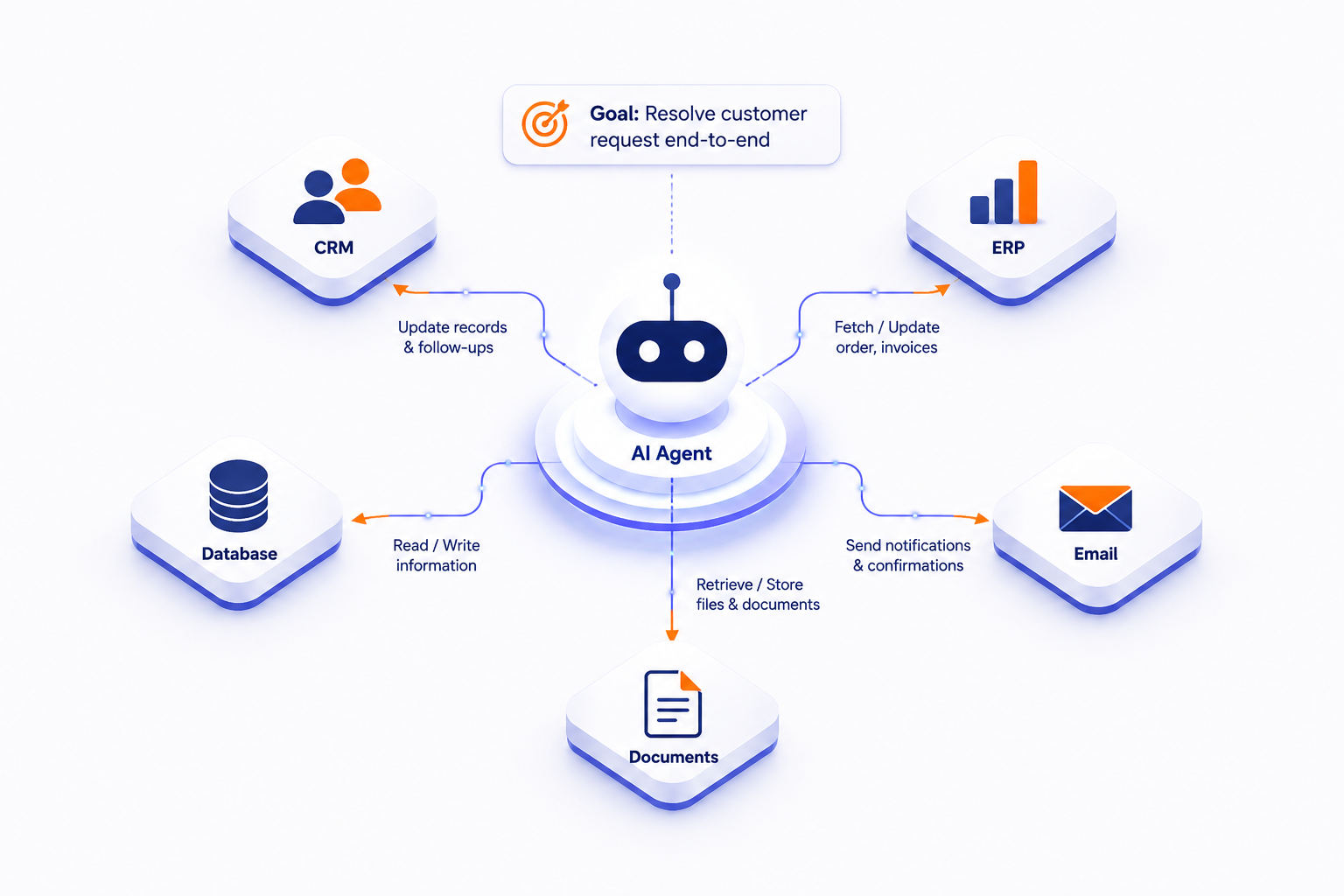
If a chatbot is a smart assistant that waits for your next question, Agentic AI is more like a capable colleague you can hand a whole job to. You give it a goal and it works out the steps, does them across whatever systems it needs and comes back with the thing done.
That's the shift in a single line: Agentic AI doesn't just answer, it acts.
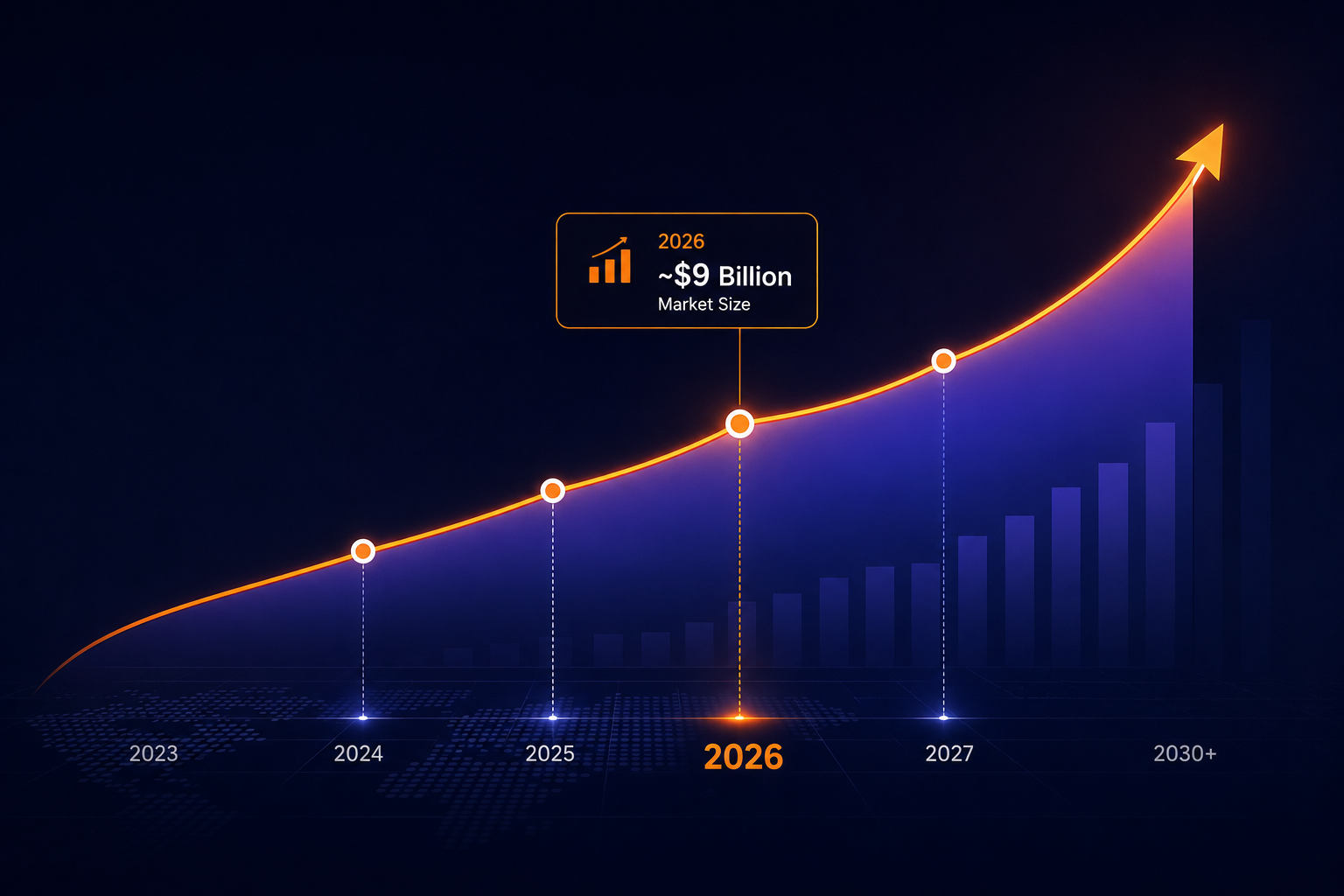
And it's arriving quickly. Gartner expects 40% of enterprise applications to have task-specific AI agents built in by the end of 2026, up from under 5% a year earlier. So it's worth getting clear on what Agentic AI actually is, how it differs from the AI you already use and where it earns its keep.
So what is Agentic AI, really?
Agentic AI is software that can take a goal and see it through on its own. Instead of stopping at an answer, it splits the goal into smaller steps, decides the order to tackle them, reaches for whatever tools it needs and course-corrects when something doesn't go to plan.
The name gives it away. "Agentic" comes from agency, the capacity to act. Ask a generative model to write an email and you'll get a well-written email. An agent reads the incoming message, pulls up the customer's record, drafts the reply, checks it against your policy, sends it and logs what it did. Same starting point, but one hands you a draft and the other finishes the job.
How is it different from Generative AI and Plain Automation?
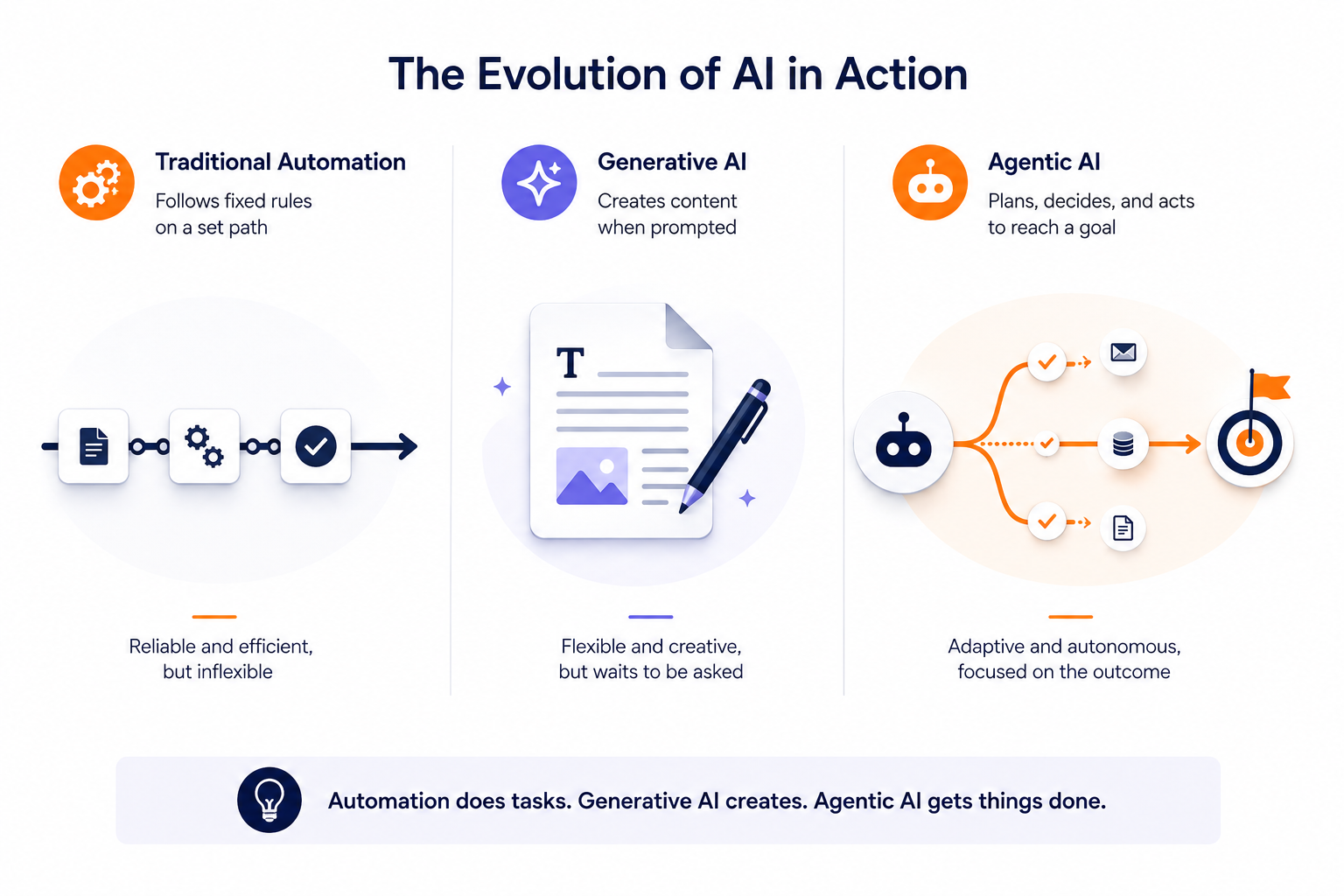
The quickest way to hold this in your head: automation follows rules, generative AI makes things, and agentic AI gets things done. Each one builds on the last. Rule-based automation is reliable but rigid. Generative AI is flexible but waits to be asked. Agentic AI adds the missing piece deciding what to do and then actually doing it.
| Dimension | Traditional automation | Generative AI | Agentic AI |
|---|---|---|---|
| What it's for | Repeating fixed steps | Creating content | Reaching a goal, end to end |
| Decisions | None — follows rules | Just the response | Plans, chooses, adapts |
| Across systems | One task, one path | Usually one output | Coordinates many tools |
| When things change | Breaks | Needs a new prompt | Re-plans on the fly |
| The human's role | Set it and run it | Prompt each time | Set the goal, then supervise |
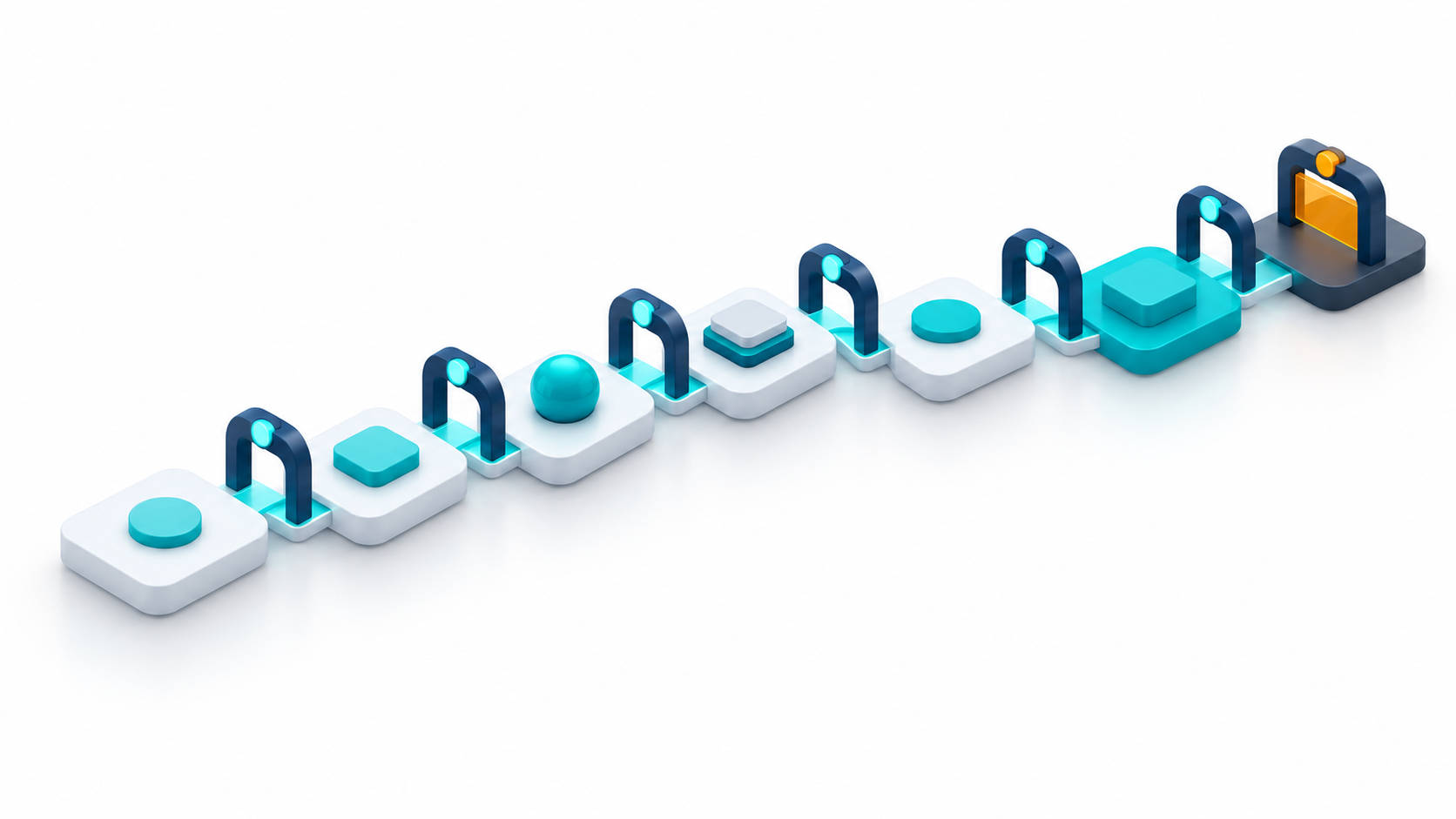
A picture that tends to stick: automation is a train on fixed tracks, generative AI is a talented writer waiting for a brief, and agentic AI is a driver who knows the destination and picks the route.
How does Agentic AI actually work?
Most agents run on a loop of four things working together.
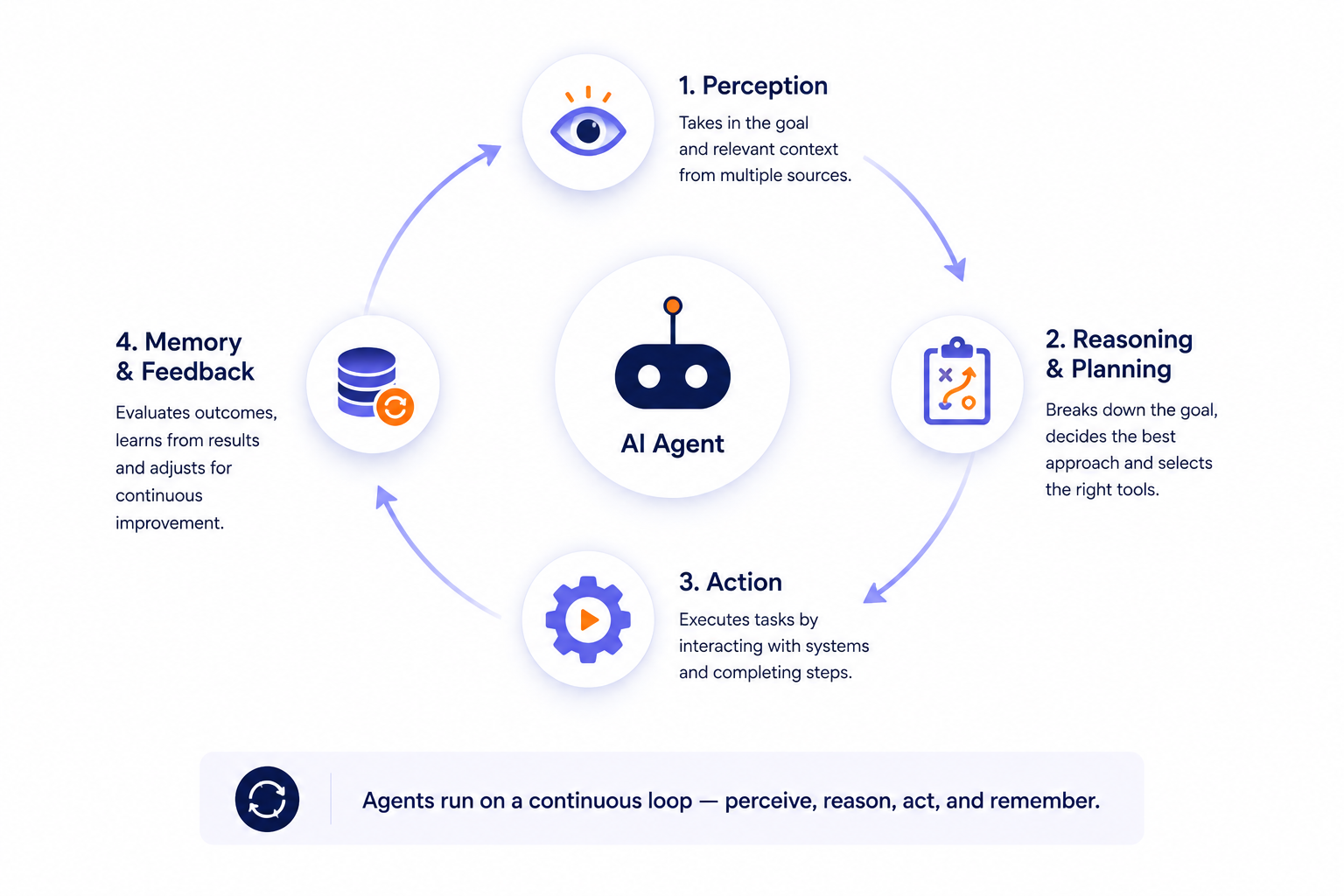
First, they take in a goal and gather context: a request, a document, a record or an event that sets them off. Then comes the part that really separates an agent from a script: it reasons about the goal, breaks it into steps and decides which tools each step needs. Next it acts by calling systems, updating a CRM, moving a file, sending a message rather than just describing what ought to happen and finally it remembers what it's done, checks the result and tries again if something failed. That last loop is what lets an agent recover from a stumble instead of grinding to a halt.
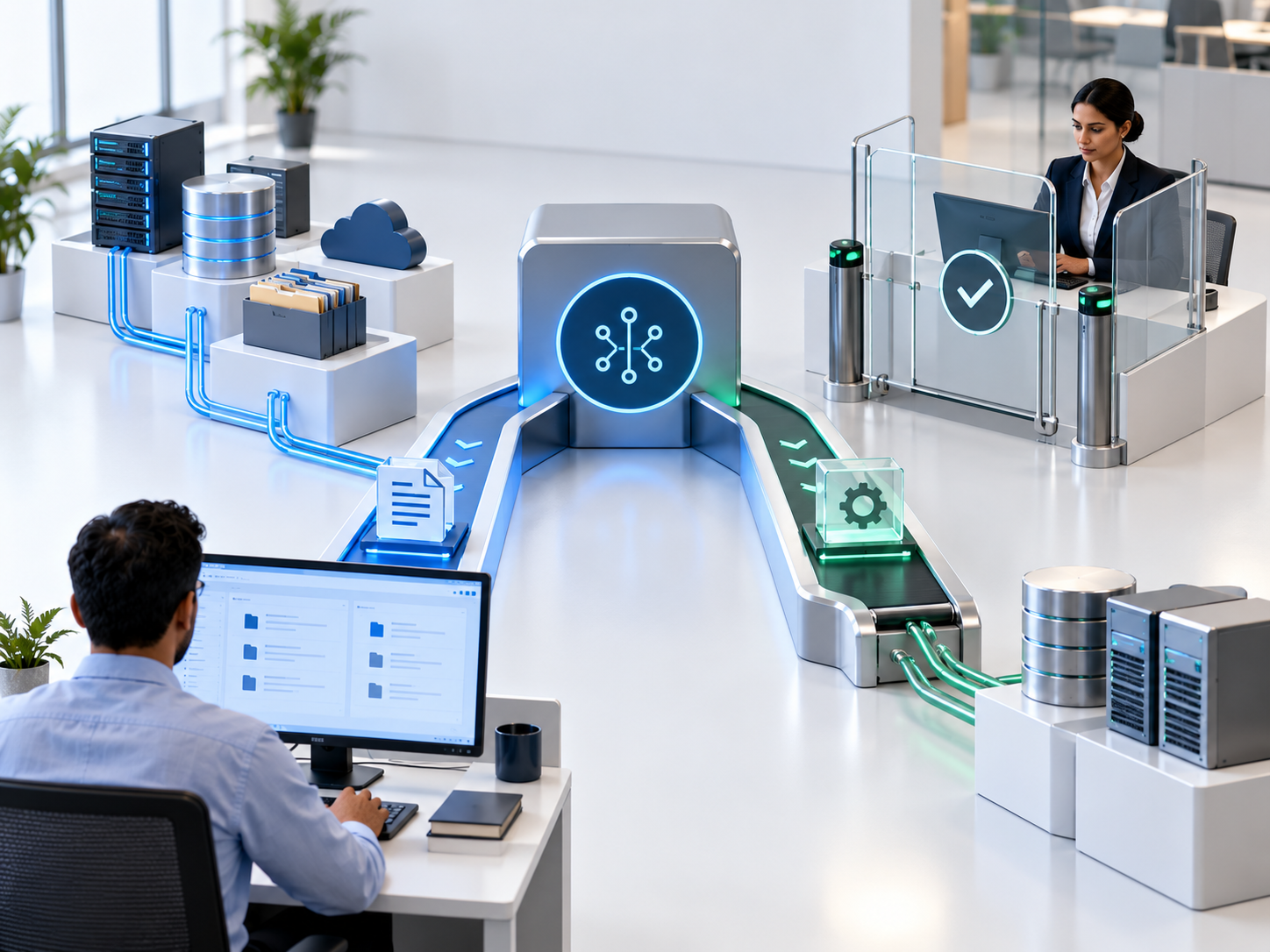
In a large organisation, several of these agents often work side by side under a coordinating layer, each handling its own slice of a bigger process. That's what people mean by a multi-agent system.
What are enterprises actually using it for?
Agentic AI shines wherever the work is repetitive, spans a few systems and calls for the same kind of judgment over and over. In practice that means:
- Finance and operations: Reading invoices, matching purchase orders, flagging the odd exception.
- Customer support: Handling routine tickets from start to finish across the help desk, CRM and knowledge base.
- HR: Screening applications, booking interviews, answering the same policy questions.
- Sales: Qualifying leads and keeping records tidy across tools.
- Document-heavy work: Pulling information out of messy, unstructured files and sending it where it belongs.
The thread running through all of these isn't a single task, it's a chain of them that used to need a person sitting between systems, nudging the work along.
What we've learned deploying agents
In our own deployments, the processes that succeed first are almost always the unglamorous, high volume ones, invoice handling or ticket triage, rather than the ambitious end to end workflows teams get excited about. Starting small is what builds the trust to grow.
What's the payoff and what's the catch?
The upside is real: faster turnaround, fewer handoffs, work that carries on around the clock and consistency on the high-volume stuff. Because agents move across systems, they can shrink a process that took days into one that takes minutes. McKinsey reckons AI agents could add somewhere between $2.6 and $4.4 trillion in value a year across business use cases.
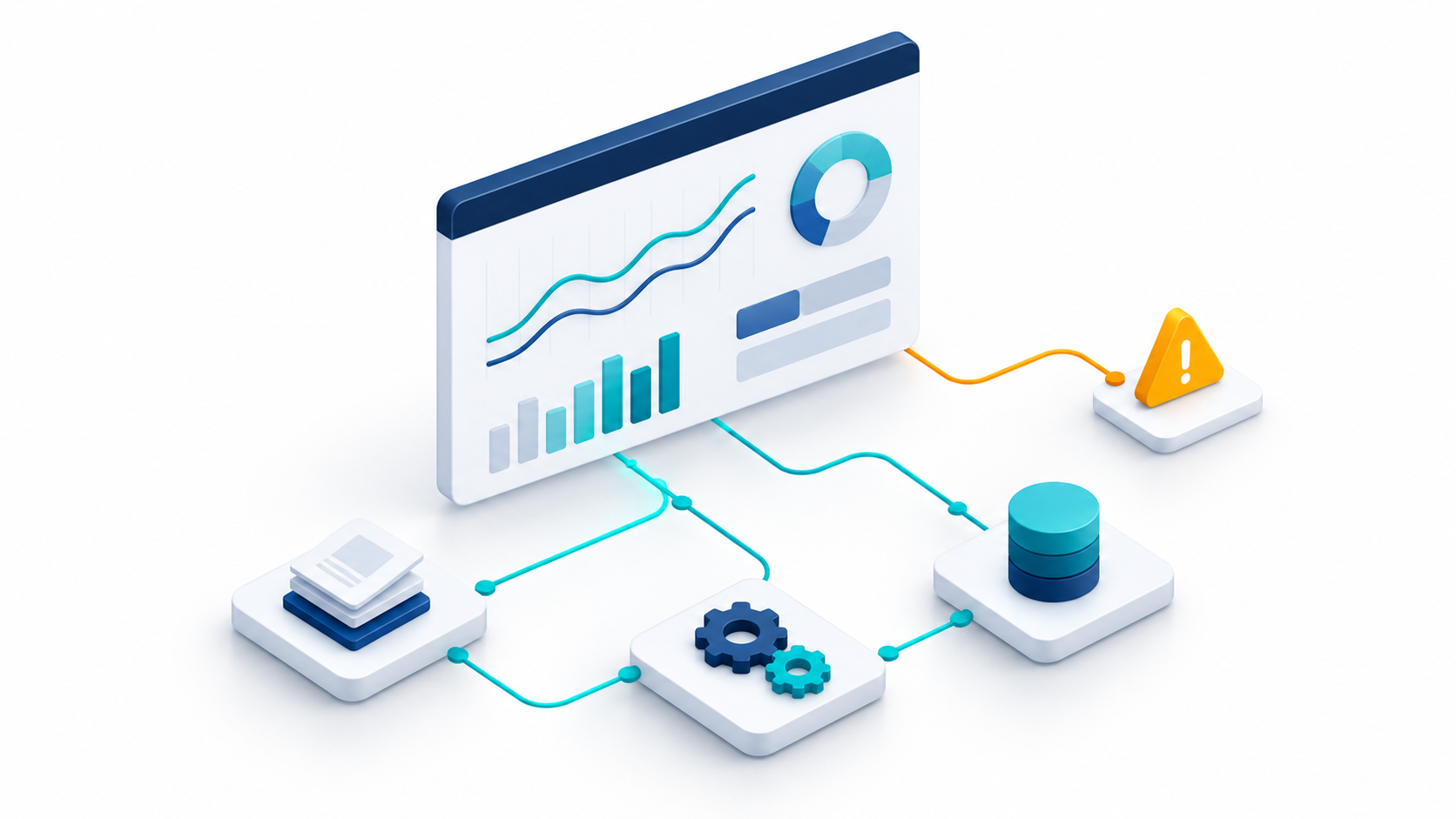
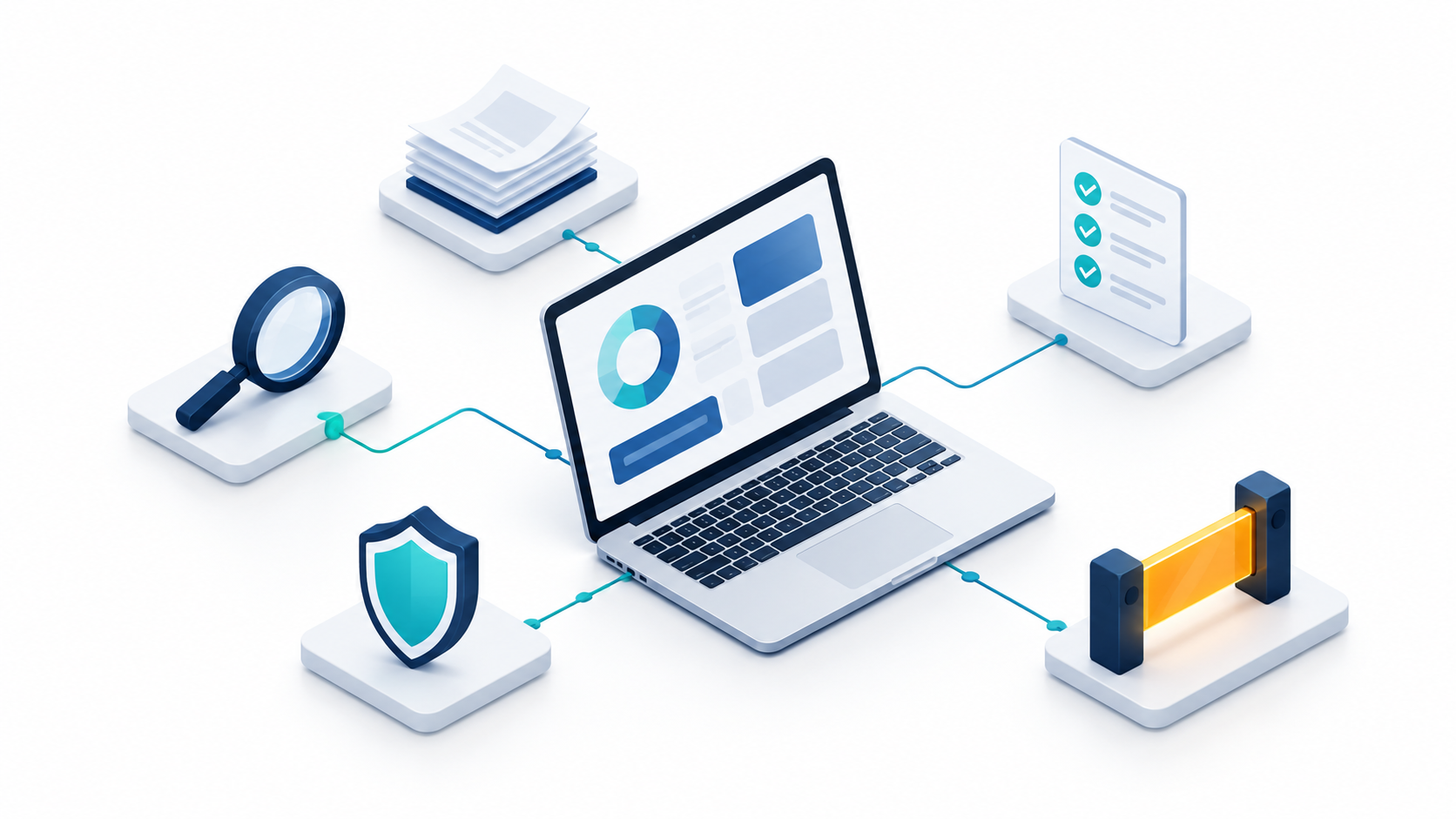
But an agent that can act can also act wrongly and at speed. That's why governance isn't optional. You need clear limits on what an agent is allowed to do, permissions scoped to its role, a human signing off on anything sensitive, and a full log of every action. In a regulated business, those controls are the whole difference between a nice pilot and something you can actually run in production.
How should you get started?
Start small. Pick one high-volume, well-understood process not your thorniest one where success is easy to point at. From there the path is fairly consistent: map the workflow step by step, decide the guardrails and where a human has to approve, pilot it on a narrow slice with real success metrics, watch the logs and refine, and only then widen the scope to nearby processes.
Modern no-code platforms have made this a lot less daunting, letting operations teams build and supervise agents without a heavy engineering lift which is why timelines that used to run in months now run in days.
Where agentic AI is headed
Agentic AI is really a move from software that responds to software that does. For a business, that means handing whole workflows not just single tasks to systems that can plan, decide and follow through, with a human watching over them. The organisations getting value from it in 2026 aren't chasing the flashiest, most autonomous agent. They started with one focused process, built the governance in from day one, and grew from there.
AIQoD is an enterprise-grade, multi-agentic AI platform that helps teams build and run AI agents across real business workflows. Explore the platform →
A few common questions
1. Is agentic AI the same as an AI agent?
They're closely related but not identical. Agentic AI is the broad capability, AI that works toward goals on its own. An AI agent is a specific system built with that capability and most real setups use several agents together.
2. Does agentic AI replace human workers?
Mostly it takes over repetitive, multi step tasks rather than whole jobs. People stay in the loop for judgment, exceptions and the sensitive decisions, while the agent handles the routine volume.
3. Is agentic AI safe for regulated industries?
It can be, when it runs with the right controls. That means role based permissions, human approval on sensitive steps, and full audit logs, which is what makes it workable in areas like banking and healthcare.
4. How is agentic AI different from RPA?
RPA follows fixed rules and breaks when conditions change. Agentic AI plans, decides, and adapts, so it can handle variation and situations it wasn't explicitly programmed for.