How to Evaluate an Enterprise AI Platform: Criteria for CIOs and Architects
Anil Nair is an enterprise AI strategist focused on AI governance, intelligent automation, agent orchestration, and the architecture required to deploy AI systems safely across complex organizations.

Choosing an enterprise AI platform comes down to seven checks: governance enforced at runtime, scoped identity and access, deployment flexibility, integration depth, model flexibility, lifecycle operations and total cost. Testing each platform on one real process, including how it handles failures, shows more than any feature list.
An enterprise AI platform is the shared foundation an organization uses to build, run and govern AI across departments, instead of buying a separate tool for every use case. Choosing one is a long term architectural decision, because the platform will sit between your AI agents and your core business systems for years.
Most vendor comparisons rank products by feature lists. A more useful approach tests each AI platform for enterprise use against the conditions your organization actually operates under: your data rules, your systems, your approval chains and your budget.
What Is an Enterprise AI Platform?
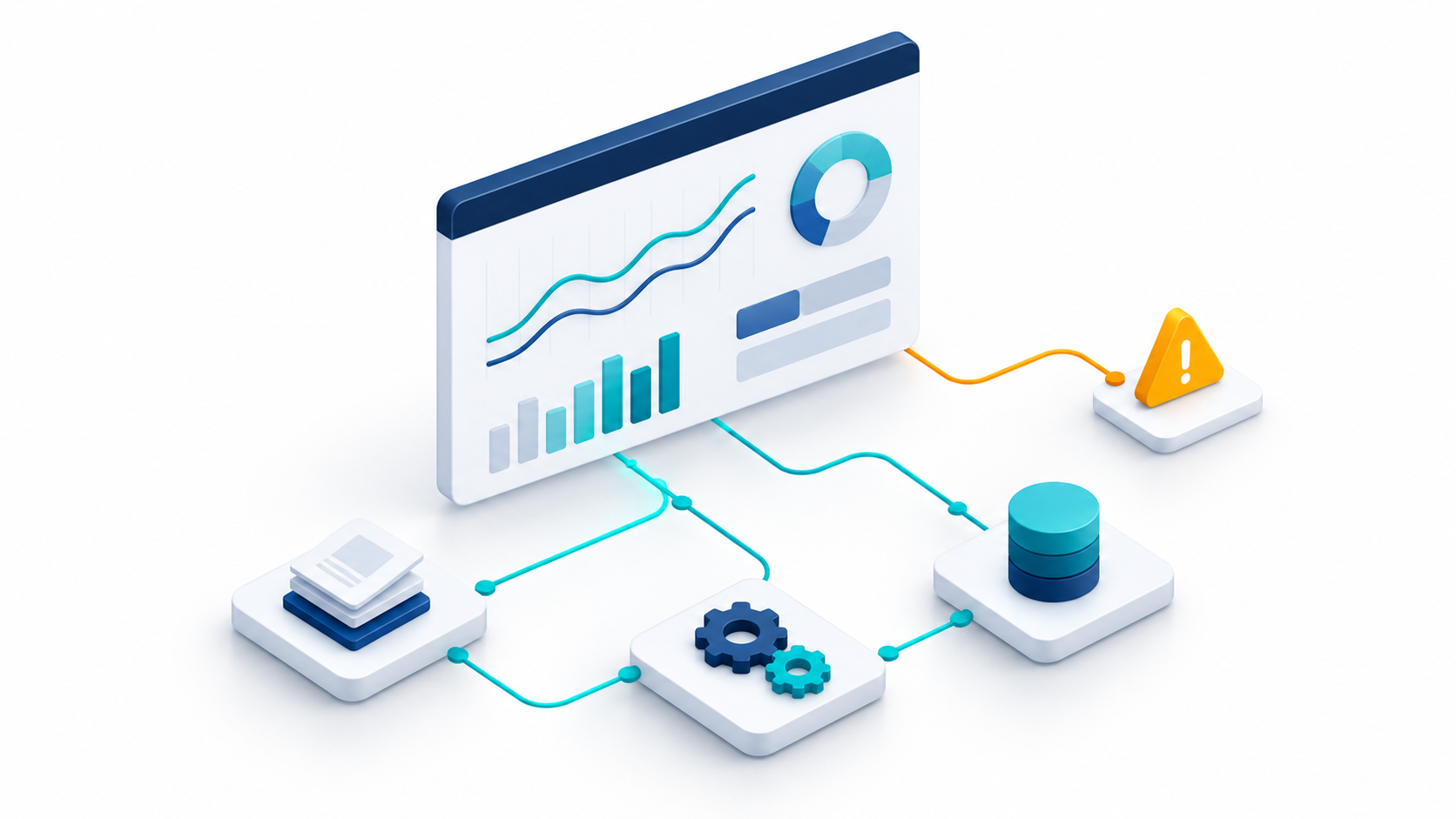
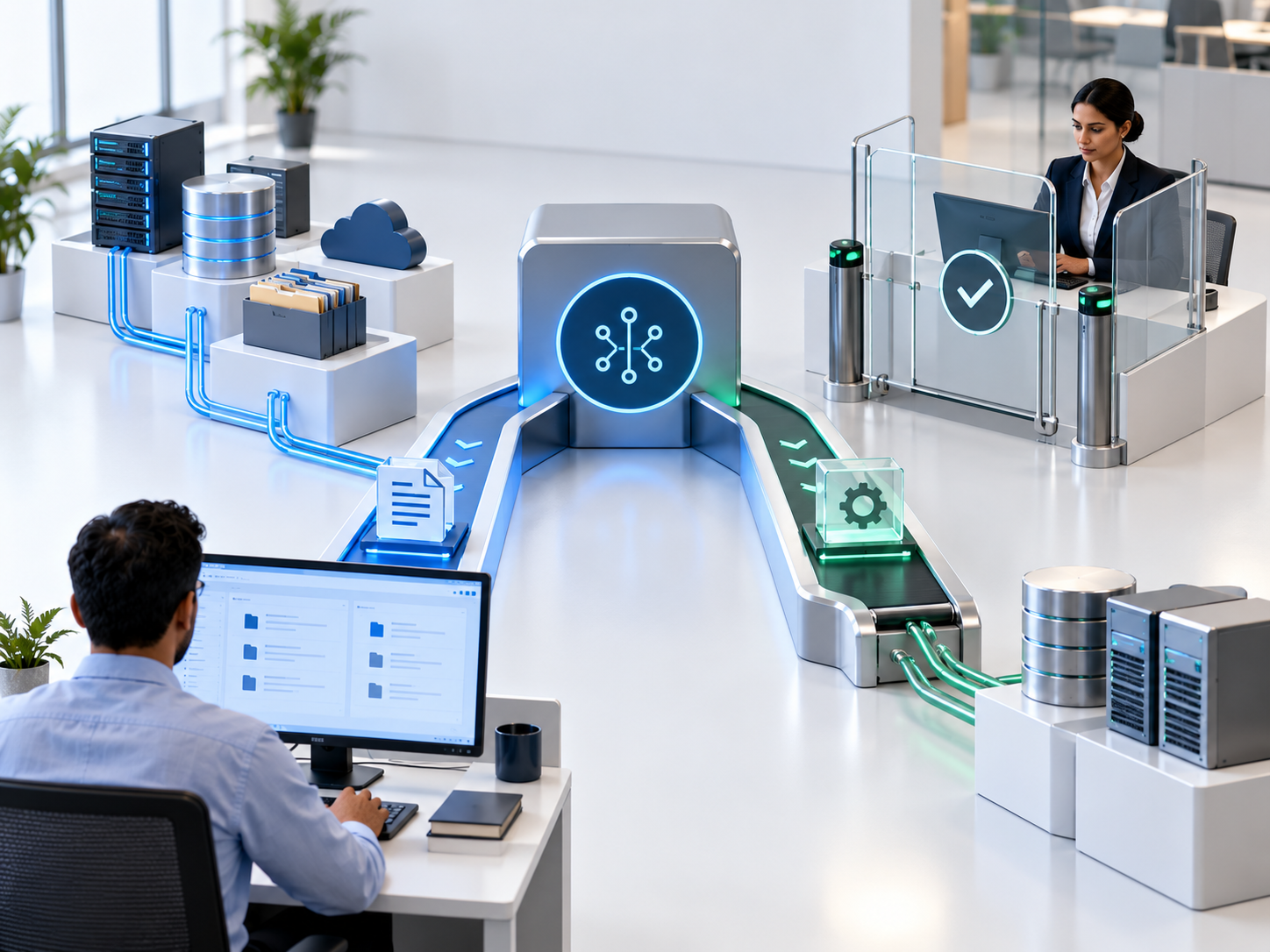
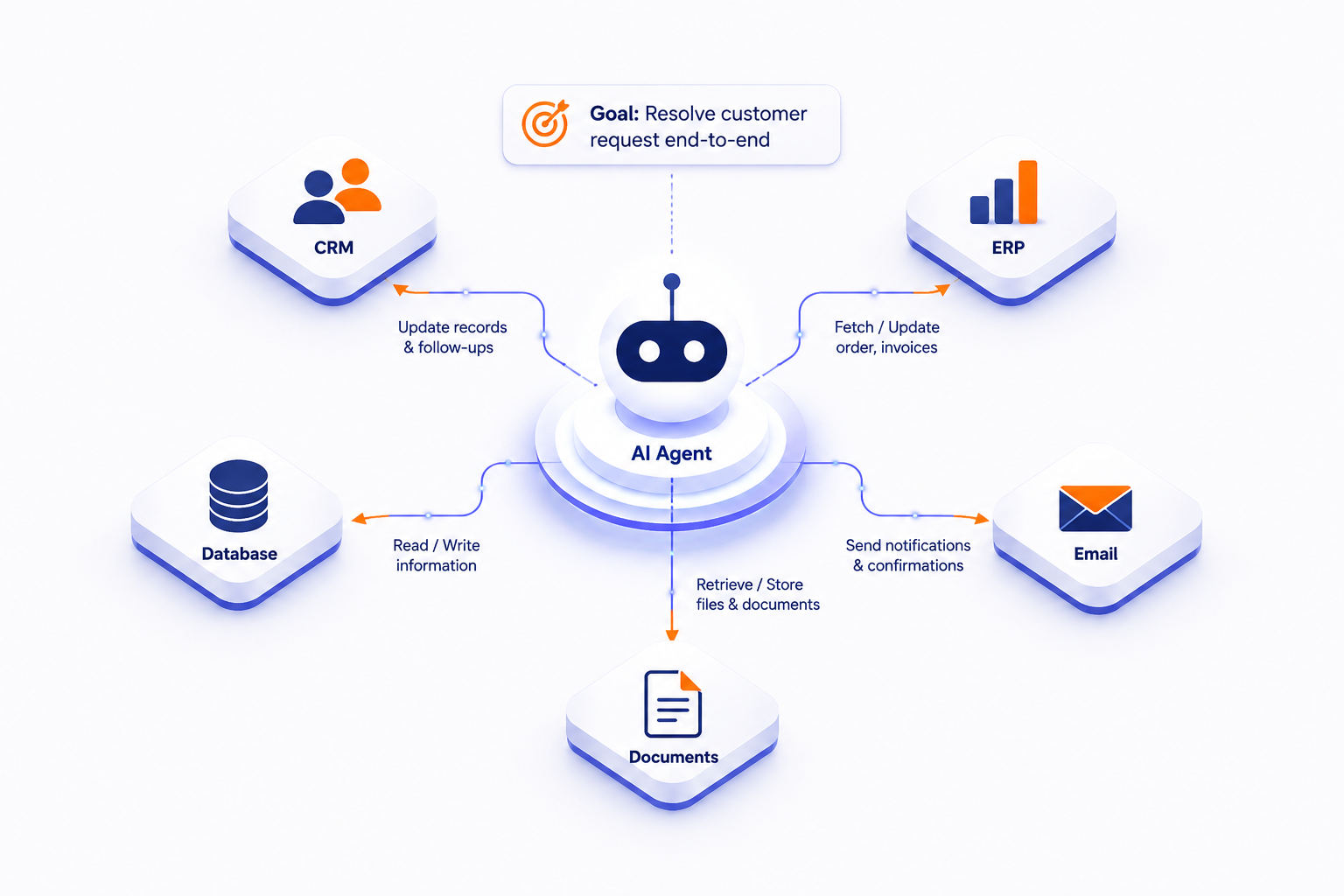
An enterprise AI platform is software that provides the common layers every AI use case needs, including data access, model access, orchestration, security, governance and monitoring. Teams build new agents and workflows on top of it rather than rebuilding those layers each time, an approach often described as an enterprise intelligence layer.
It differs from enterprise AI software built for a single task. A document extraction tool solves one problem well, while a platform lets a telecom operator run network ticket triage, contract review and customer service agents on the same foundation and under the same controls.
7 Criteria for Evaluating an Enterprise AI Platform

Seven criteria separate an enterprise AI platform that scales from one that stalls after the first pilot. Each one maps to a question your architecture, security and finance teams will ask anyway.
1. Governance Built Into the Runtime
Runtime governance means the platform enforces policies while AI is running, not only in documents reviewed before launch. It covers approval gates, escalation of uncertain decisions and a complete record of what each agent did and why.
Ask the vendor to show an action being blocked because it lacked approval. A platform that can only describe its governance, rather than demonstrate it, leaves your team to build those controls in house.
2. Security and Identity Controls
Security and identity controls decide who and what can reach each business system through the platform. For AI agents, each agent needs its own credentials and its own scoped permissions rather than a shared service account.
Check whether read and write access can be granted separately per agent and per system, as covered in our guide to read and write security for AI agents. AIQoD, for example, gives agents read access by default and grants write access separately for each agent and each system, which limits what any single agent can change.
3. Deployment Flexibility

Deployment flexibility is the range of environments where the platform can run, from public cloud to a private VPC, on premise data centers and fully air gapped networks. It matters most where data residency or sector regulation limits where information can travel.
A hospital network handling patient records may need everything inside its own data center. Confirm that security and audit controls work the same way in every environment, not only in the vendor's own cloud.
4. Integration With Existing Systems
Integration is the platform's ability to connect with the ERP, CRM, ticketing and legacy systems where enterprise work actually happens. Strong platforms support APIs, event streams and data pipelines, with robotic process automation as a fallback for systems that have no API.
A logistics company running a decades old warehouse system cannot wait for a modern API. Ask how the platform handles failed calls, rate limits and retries, because production integrations fail in ways that demos never show.
5. Model Flexibility
Model flexibility is the ability to use and switch between different AI models without rebuilding the agents that depend on them. The model market changes quickly, so a platform tied to one provider ties your roadmap to that provider's pricing and progress.
Check whether you can route different tasks to different models and bring your own model where needed. This also matters for air gapped deployments, which require models that run locally.
6. Lifecycle Operations
Lifecycle operations cover everything after launch: testing, monitoring, versioning, rollback and retirement of each agent. Much of the long term value of enterprise AI solutions is won or lost in this phase rather than at deployment.
Ask to see how the platform detects a drop in accuracy and how quickly a previous version can be restored. An airline maintenance team using document extraction for inspection records needs that answer before going live, not after an error.
7. Total Cost and Time to Value
Total cost of ownership includes licensing, usage fees, integration work, internal staff time and ongoing maintenance, not just the subscription price. Time to value is how long the first use case takes to show a measurable result in production.
Seat based, usage based and outcome based pricing behave very differently at scale. Ask for the path from one pilot to ten production use cases and what each additional agent costs to build and govern.
Enterprise AI Platform Evaluation Scorecard
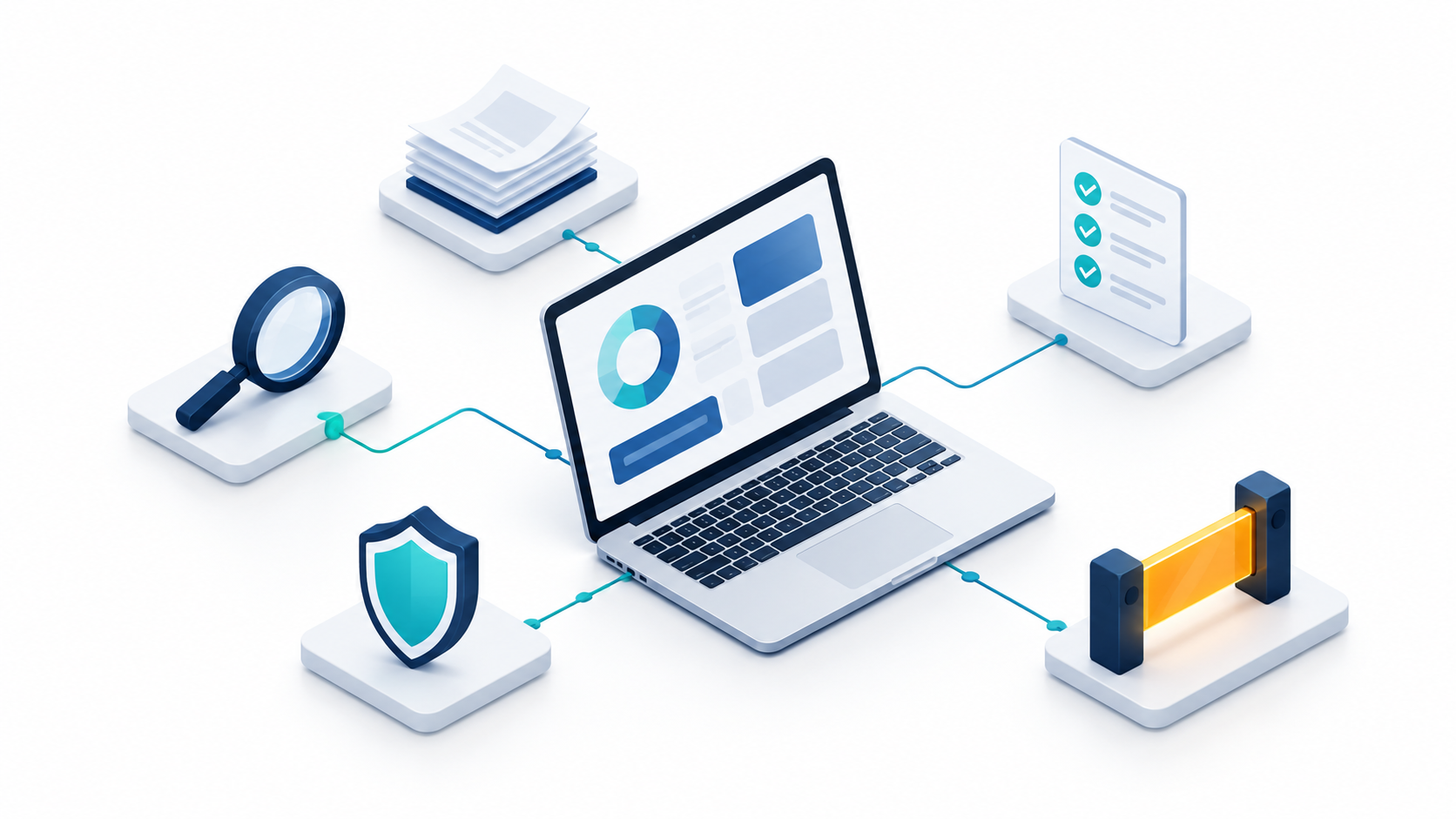
An evaluation scorecard turns the seven criteria into questions to ask in every vendor demo. The table lists what to ask and the warning signs that point to gaps.
| Criterion | Ask the Vendor | Warning Sign |
|---|---|---|
| Runtime governance | Show an action blocked by a missing approval | Governance exists only in documentation |
| Security and identity | How does each agent authenticate | Agents share one admin or service account |
| Deployment | Can the same controls run in our VPC or data center | Full features only in the vendor cloud |
| Integration | How are failed calls retried or escalated | Failures are logged but not acted on |
| Model flexibility | Can we switch models per task | One model provider is hard coded |
| Lifecycle operations | How is a faulty version rolled back | No version history for agents |
| Cost and time to value | What does the tenth use case cost | Pricing only covers the pilot |
How to Run an Enterprise AI Platform Evaluation
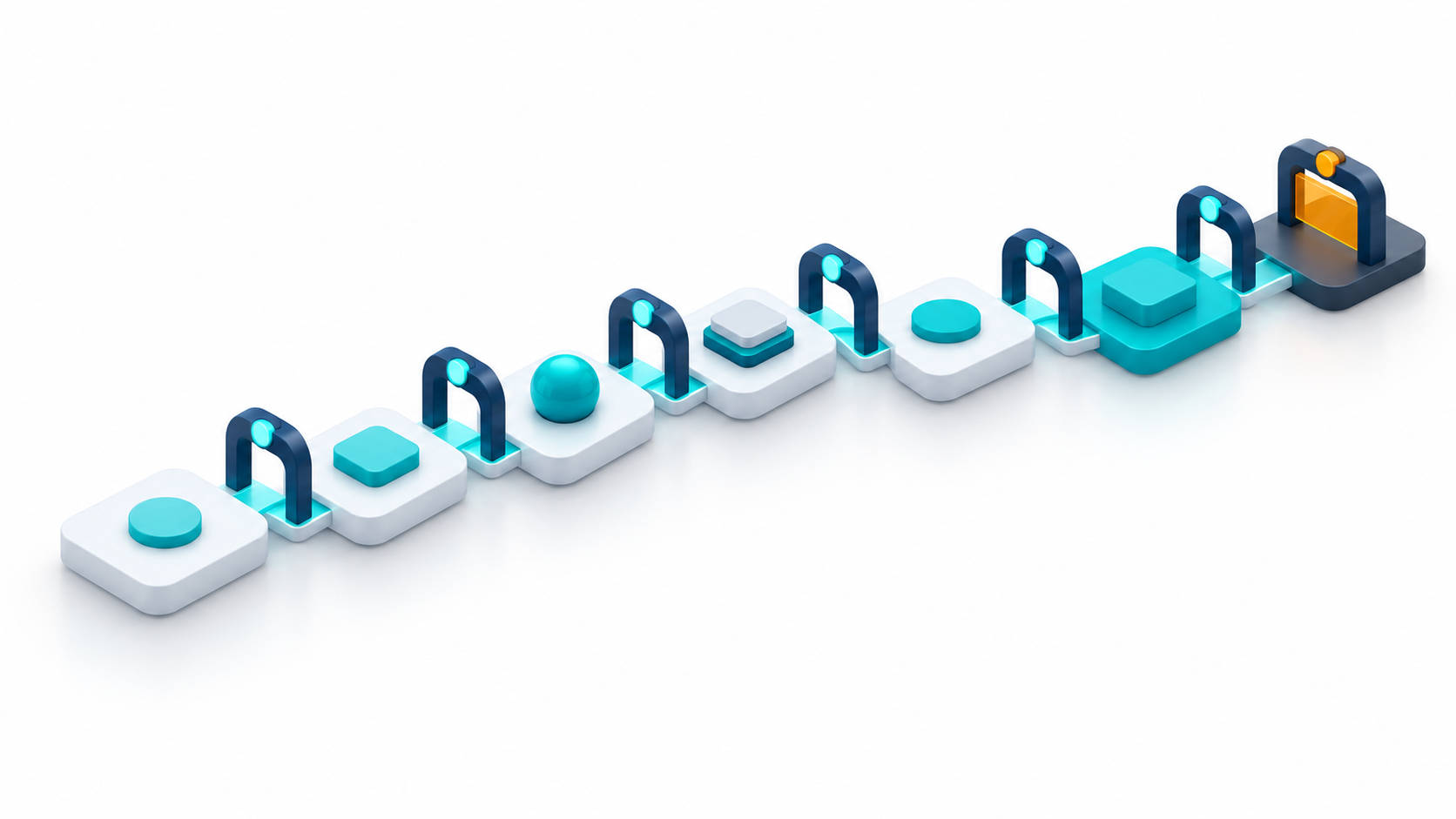
A reliable evaluation tests platforms on one real process under real constraints rather than comparing slide decks. Five steps keep the process short and decisive.
- Filter by hard constraints first. Remove any platform that cannot meet your deployment, data residency or security requirements before comparing features.
- Pick one real process for the pilot. Choose a process with clear volume, a measurable baseline and a business owner who will approve the results.
- Test failure, not only success. Feed the pilot edge cases, missing data and requests outside policy and confirm that each one escalates to a person.
- Measure against the baseline. Compare cycle time, error rate and manual effort before and after, using numbers your finance team accepts.
- Check the path to scale. Confirm how the second and third use cases reuse the integrations, controls and data from the first.
Conclusion
The right enterprise AI platform is the one that fits your constraints and keeps working after the pilot ends. Runtime governance, scoped identity, deployment choice, integration depth, model flexibility, lifecycle operations and a clear cost path matter more than any single feature.
Evaluate with a real process, test how the platform behaves when things go wrong and keep people in charge of the decisions that carry risk. For the policies and roles a platform should enforce, see our guide to building an AI governance framework.
Frequently Asked Questions
What is the difference between enterprise AI software and an enterprise AI platform?
Enterprise AI software usually solves one defined task, such as document extraction or chat support. An enterprise AI platform provides the shared foundation on which many such use cases are built, governed and operated together.
How is an enterprise AI platform different from an agent framework?
An agent framework gives engineers code libraries for building agents and leaves security, governance and operations to be built in house. An enterprise AI platform includes those layers, so each new agent inherits the same controls.
What certifications should an enterprise AI platform vendor hold?
Common security evidence includes a SOC 2 Type II report and ISO/IEC 27001 certification for information security. ISO/IEC 42001 adds certification of the vendor's AI management system, which is voluntary and carried out by independent certification bodies. For risk practices behind these certifications, the NIST AI Risk Management Framework and ISO's overview of ISO/IEC 42001 are useful references.